Smarter Logging Style Guide
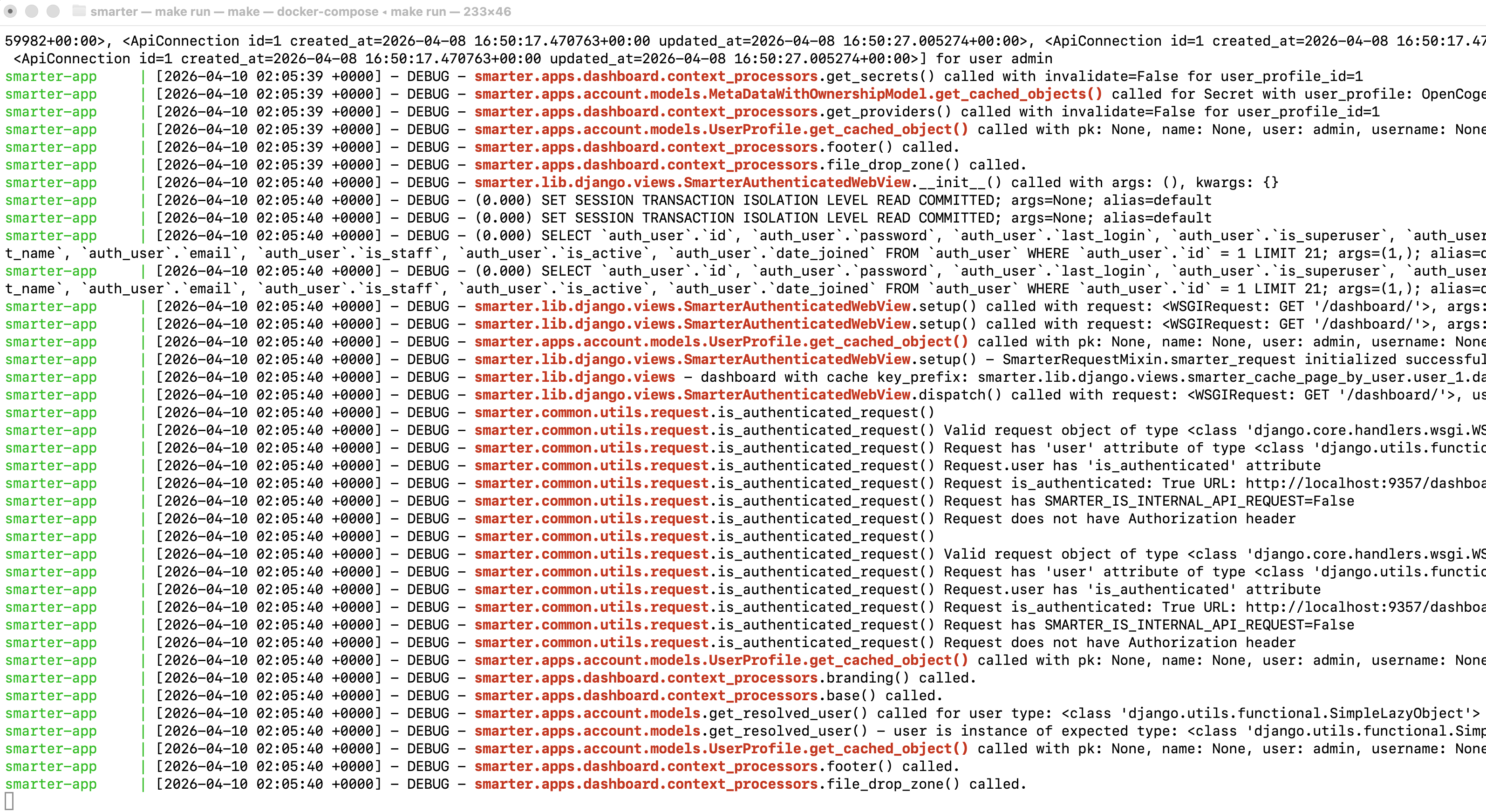
Smarter uses text-formatted Python dot-notated paths to identify the origin of
log messages. For example, a log message from the mask_string() function of
the smarter.common.utils.utils module is prefixed with
smarter.common.utils.utils.mask_string(). This provides the equivalent
of a run-time trace of the code that generated the log message, which greatly
improves the usefulness of log messages for debugging and monitoring purposes.
The logger writes this prefix, not the code that logs. A module logs through
logging.getSmarterLogger(__name__), which returns a
WaffleSwitchedLoggerWrapper.
Each of its logging methods reads the caller’s frame with
caller_name() and puts the formatted name in
front of the message, so a call site writes only its own text:
from smarter.lib import logging

logger = logging.getSmarterLogger(__name__)


class PluginDataApi:

    def execute_request(self):
        try:
            ...
        except RequestException as e:
            logger.error("API request failed: %s", e)

# smarter.apps.llmtool.models.plugin_data_api.PluginDataApi.execute_request() API request failed: ...
A method is named after the class that runs it, so a base class’s method that a
subclass runs logs the subclass’s name. A record keeps the caller’s
funcName and lineno.
Log messages should answer the following questions:
What happened?
Where did it happen?
When did it happen?
What data was passed?
Was it successful?
What data was returned?
Other recommendations:
Never write the origin yourself, e.g. a module prefix, a class name or a hard-coded function name: the logger already wrote it, and a hard-coded name goes stale when the function is renamed.
Be mindful of the log level you choose for each message.
Use the WaffleSwitchedLoggerWrapper’s Waffle switches to control logging output.